

Metallic Gas Barrier
An aluminum-based liner forms the gas-containing core, providing a metallic foundation for the composite vessel.
Exploring lighter, high-performance gas storage through metallic liners and advanced composite reinforcement.
Explore the engineering principles behind our development-stage metallic-liner and carbon-fiber composite cylinder concept.
Discover the technology ↗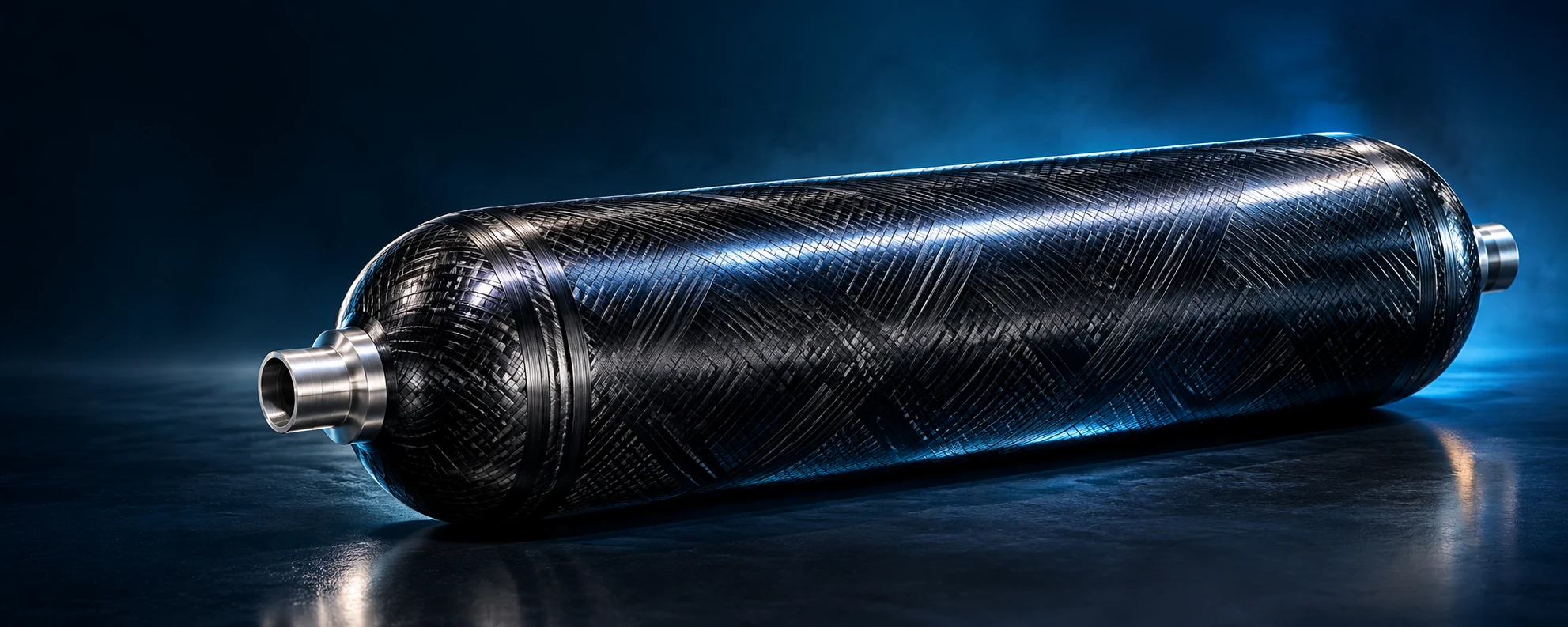 AI-assisted illustration
VNZT is developing a patented Type 3 composite pressure vessel concept intended to support lighter, high-pressure gas storage. Our work connects structural design, manufacturability, and a pathway toward prototype testing and regulatory qualification.
VNZT has described earlier 9-liter prototype work at a nominal 350-bar design pressure and is evaluating a pathway toward cylinder capacities up to 60 liters.
Product testing, qualification, and applicable U.S. DOT/PHMSA authorizations are development objectives; they are not represented here as completed certifications.
Discuss technical collaboration →Explore the proposed vessel assembly sequence in the engineering illustration below, from the initial metal tube to the completed filament-wound structure.
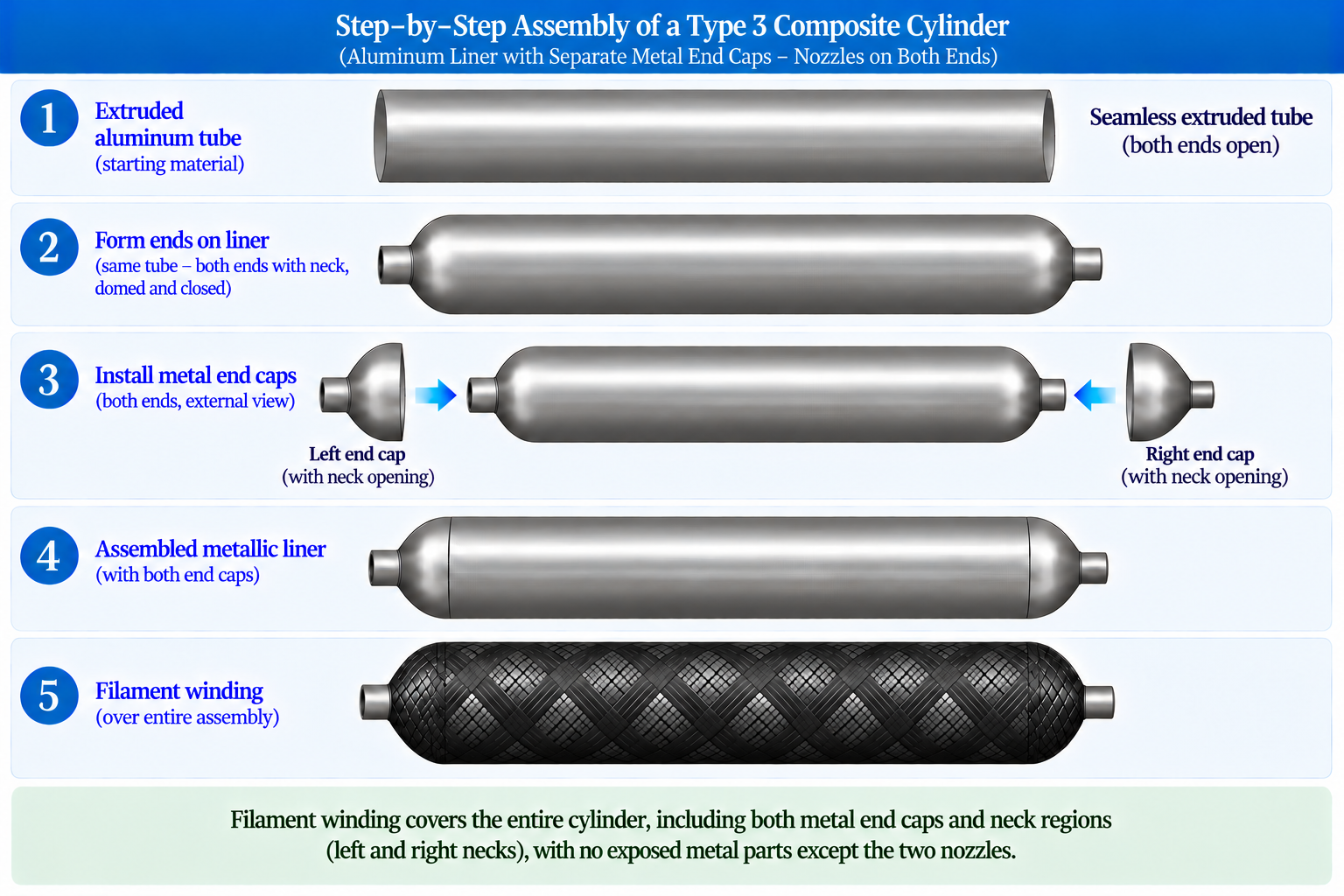
The full assembly sequence appears above. Here, explore the three structural ideas that shape VNZT's development approach.
An aluminum-based liner forms the gas-containing core, providing a metallic foundation for the composite vessel.

The patented approach uses separately produced metallic end caps integrated with the contoured liner.

Filament-wound reinforcement covers the vessel assembly, including the metallic end caps, leaving only the nozzles exposed. The purpose is to alleviate the high stresses in the dome area.
Evaluate pressure-induced stresses, particularly in critical transition regions, to inform design decisions and identify areas requiring further investigation.
Assess material selection, fabrication methods, and filament-winding parameters with attention to repeatability and practical manufacturing requirements.
Plan prototype evaluation, structural testing, and the documentation needed to support applicable standards and regulatory qualification pathways.