
The Future Energy Systems
Investigating the role of composite storage vessels in future alternative-fuel and energy systems, subject to engineering and regulatory requirements.
Starting with helium, while investigating broader industrial opportunities for advanced gas storage.
VNZT is exploring Type 3 filament-wound composite pressure vessels for alternative-fuel storage tanks, with a particular focus on mobile applications, vehicle integration, and transportation supply chains. The concepts below illustrate applications and technical directions; application-specific qualification remains essential.
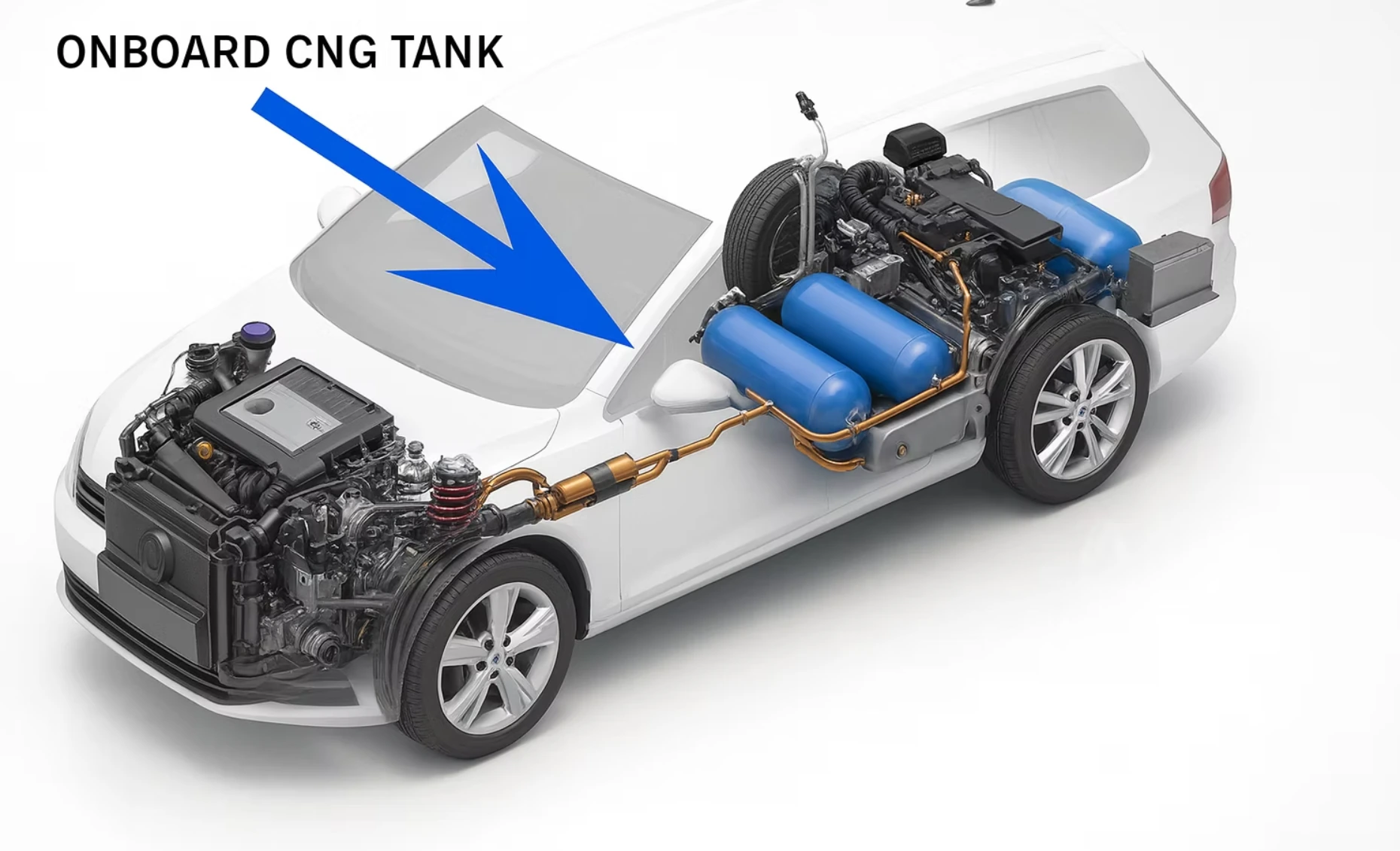
Onboard compressed natural gas (CNG) and other alternative-fuel tanks are a key application area for lightweight composite pressure-vessel architecture. The vehicle schematic illustrates a possible onboard tank arrangement.
Illustrative application schematic, not a VNZT-certified installation.
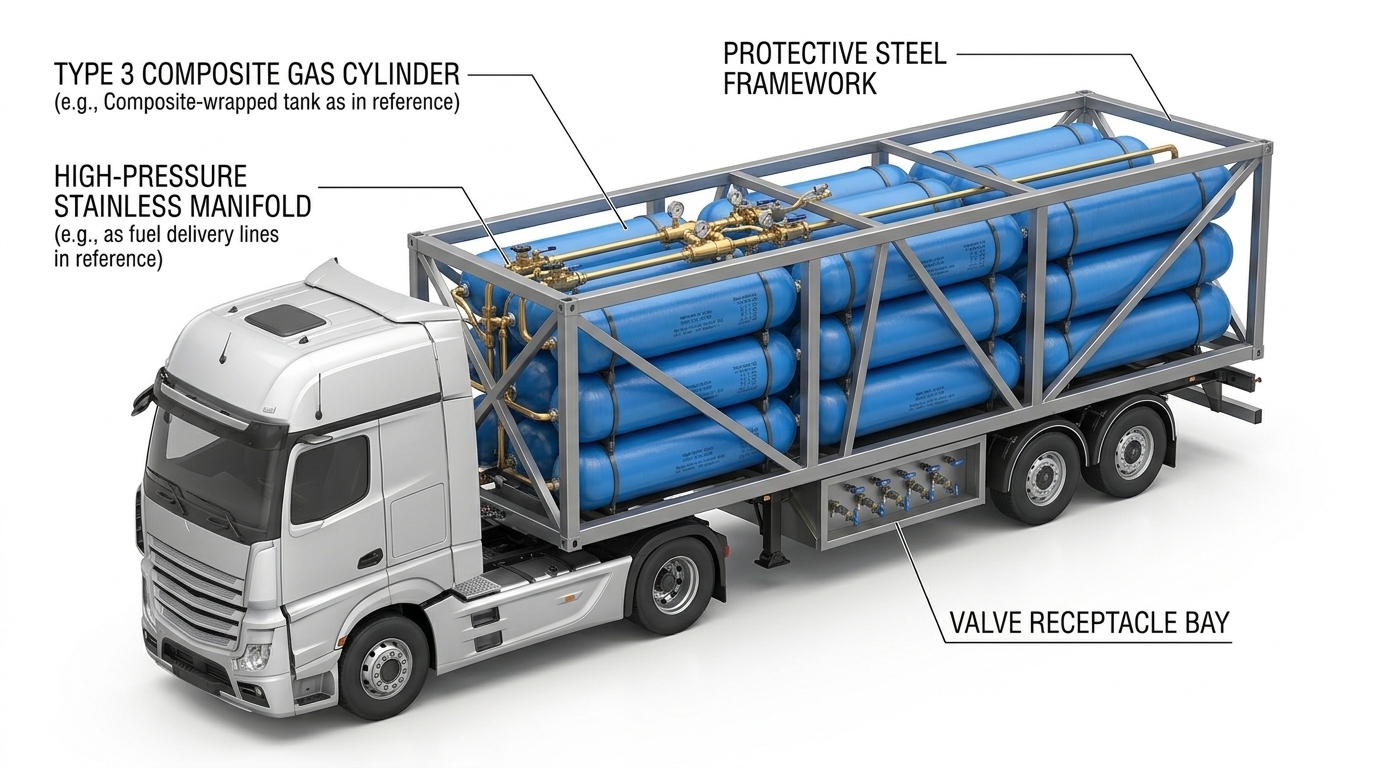
High-pressure tube trailers are another potential mobile application for Type 3 Composite Overwrapped Pressure Vessels (COPVs). Multiple cylinders can be secured within a protective structural frame and connected through a pressure-rated manifold for bulk gas transportation and controlled delivery.
Compared with conventional steel-cylinder arrangements, lightweight COPV technology offers a potential pathway to reducing vessel weight while supporting gas distribution logistics. Actual payload, cylinder capacity, and transport suitability depend on system engineering, applicable regulations, and qualification.
Illustrative tube-trailer concept. Cylinder restraints, pressure components, and transport systems require application-specific design and certification.
 AI-assisted illustration
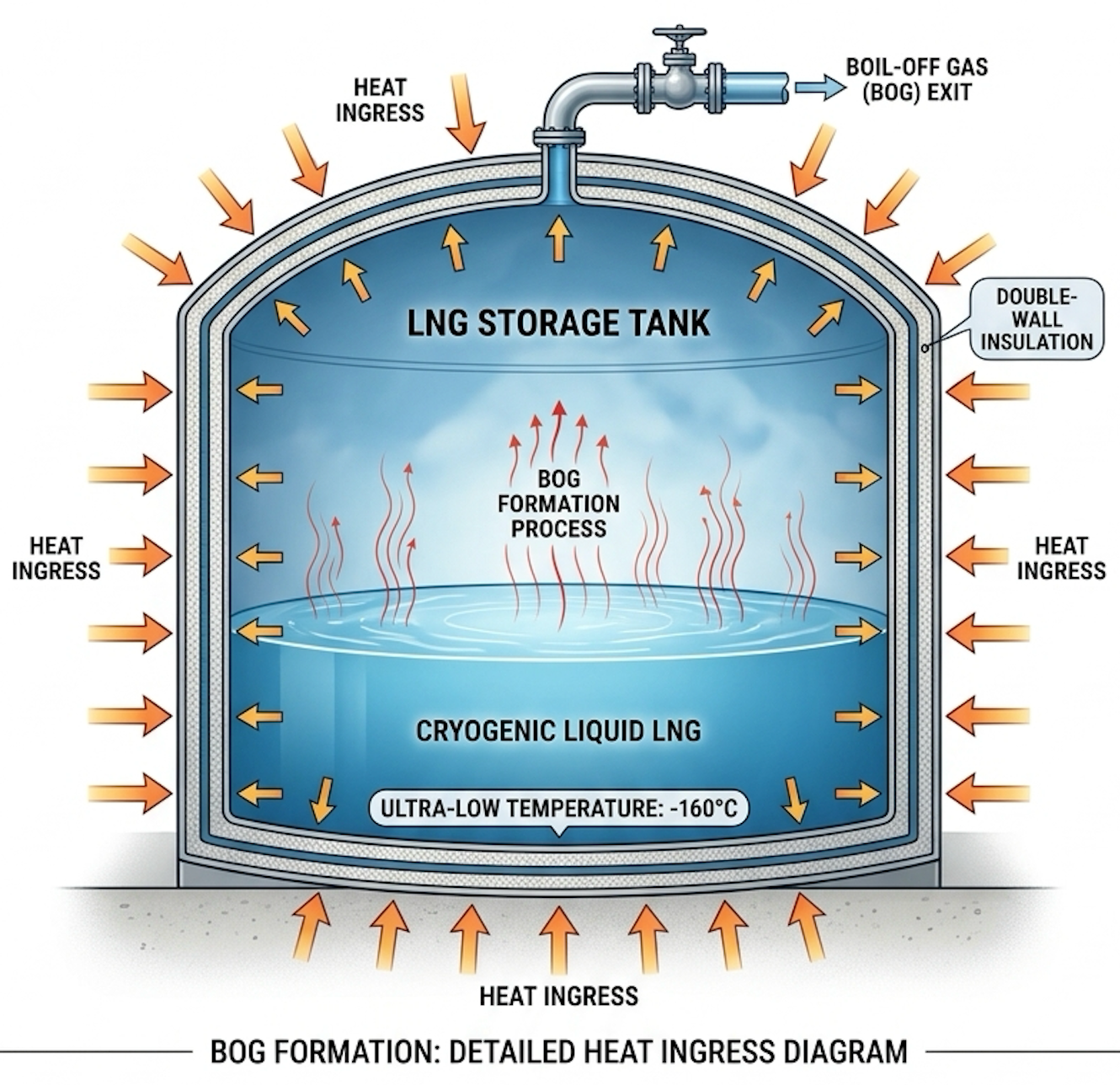
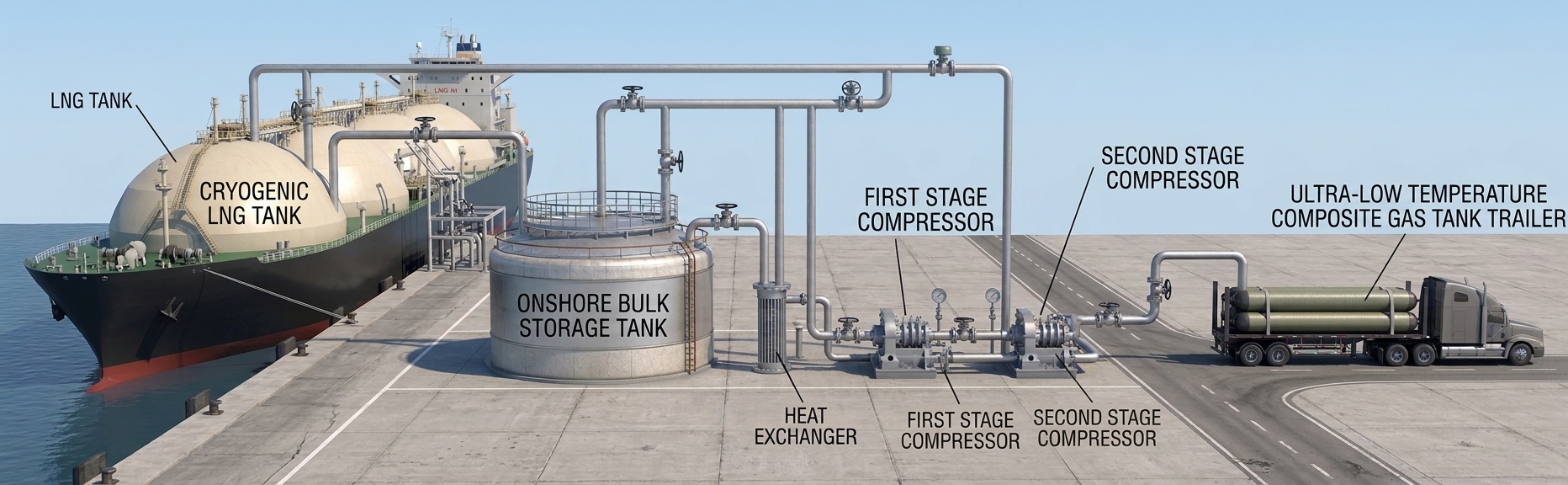
VNZT's boil-off gas recovery concept is associated with the company's 2022 U.S. patent, US 11,313,515 B1. The potential application is to capture boil-off gas from cryogenic storage and retain it as usable gas, while exploring ultra-low-temperature storage and more efficient distribution. Engineering validation is required for specific applications.
 AI-assisted illustration
The ultra-low-temperature storage concept shown in the schematic is intended to allow gases to be stored at very low temperatures, enabling higher storage capacity while maintaining safety and structural integrity.
For transportation and distribution, greater storage capacity per shipment could reduce the number of trips and associated fuel requirements. The illustration connects industrial gas storage, temperature-controlled transportation, and the potential for lower logistics-related CO₂ emissions.
The boil-off gas recovery approach is a potential application of the innovation covered by the company's 2022 patent (US 11,313,515 B1). It seeks to capture and store gas that would otherwise be vented or require additional processing, with the goal of reducing reliquefaction needs and potential methane emissions.
These are proposed benefits shown in the supplied reference material. Actual capacity, emissions, transport efficiency, and safety performance depend on the gas, operating conditions, vessel design, and validation.
Patent reference: U.S. Patent 11,313,515 B1 (2022) — explore patents & innovation →
Technology concepts shown for illustration. Quantified methane-emission reductions and system performance require project-specific validation.
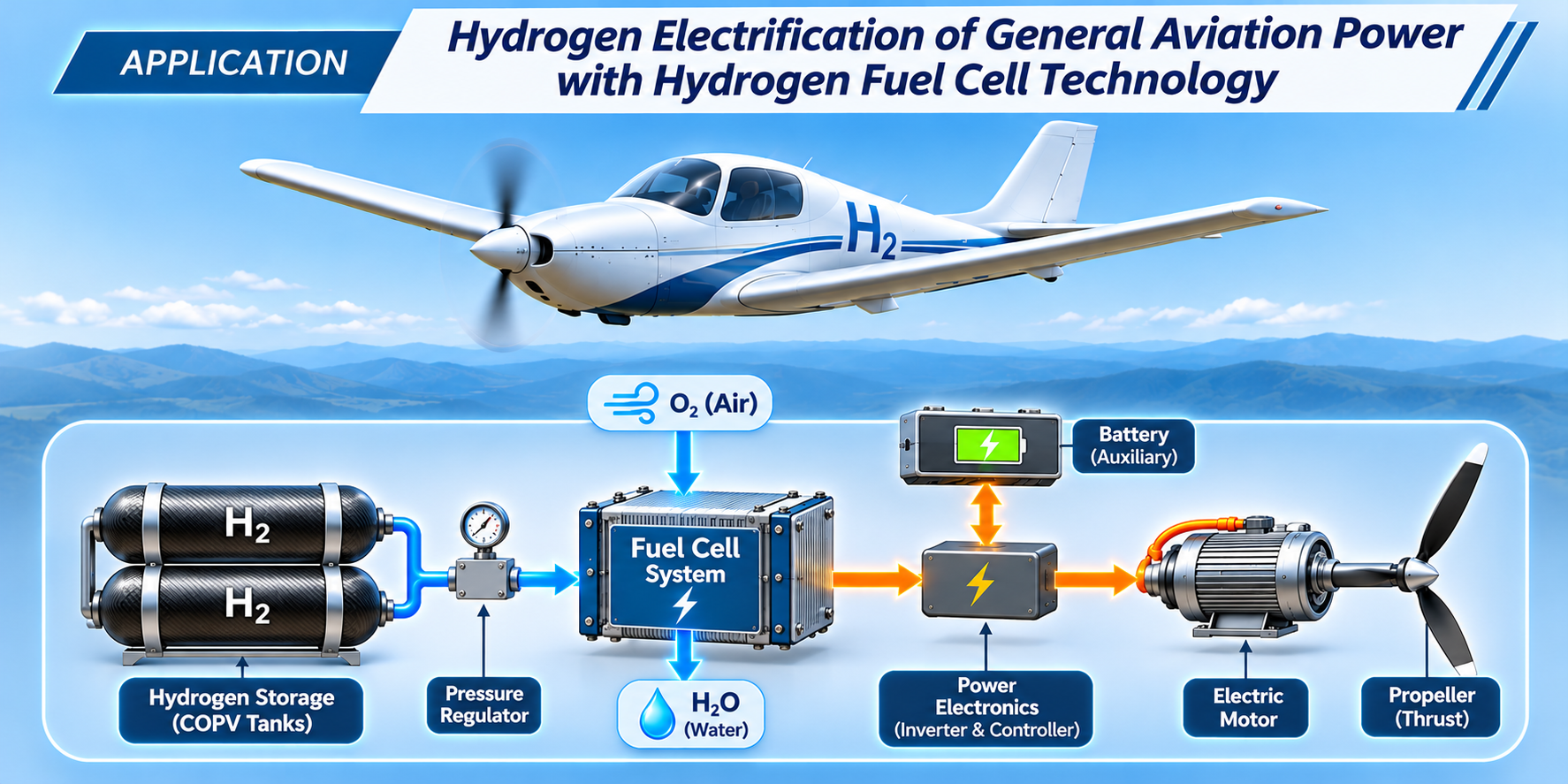
Hydrogen fuel cells offer a potential route to electric propulsion in general aviation. Compressed hydrogen stored onboard can be supplied to a fuel cell, where it reacts electrochemically with oxygen from the air to produce electricity. Power electronics then condition that electricity for an electric motor driving the aircraft propeller; an auxiliary battery may help support changing power demands.
 AI-assisted illustration
Lightweight, high-pressure hydrogen storage is an important enabling subsystem for fuel-cell-powered aircraft. VNZT's Type 3 COPV development could contribute to this emerging application by addressing the vessel architecture for onboard hydrogen storage. Aircraft use would require hydrogen compatibility assessment, fatigue and leak testing, weight optimization, crashworthiness considerations, and aviation-specific certification.
Hydrogen flows from the storage vessels through pressure regulation to the fuel cell. Ambient air supplies oxygen; the fuel cell produces electrical power, water and heat. A controller and power electronics deliver electrical energy to the motor and propeller, with a battery available for transient loads in some designs.
Fuel-cell operation has no direct carbon-dioxide emissions; life-cycle emissions depend on hydrogen production and the wider energy supply chain. VNZT is not claiming an approved aviation installation.
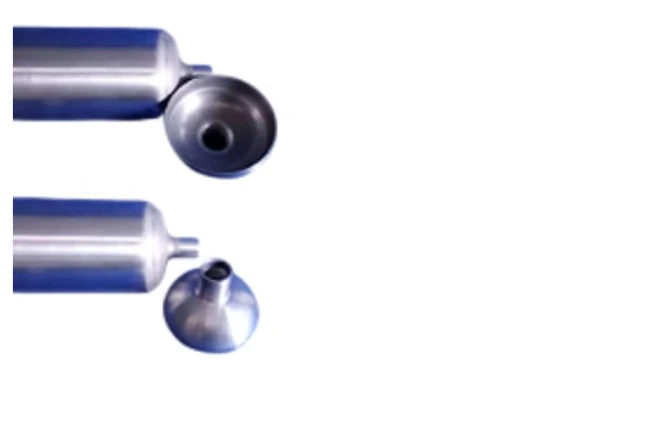
Metallic liners, separate metallic end caps, and filament-wound reinforcement form the foundation of the composite vessel approach. The supplied cylinder and end-cap images are shown as engineering references.
Explore the architecture →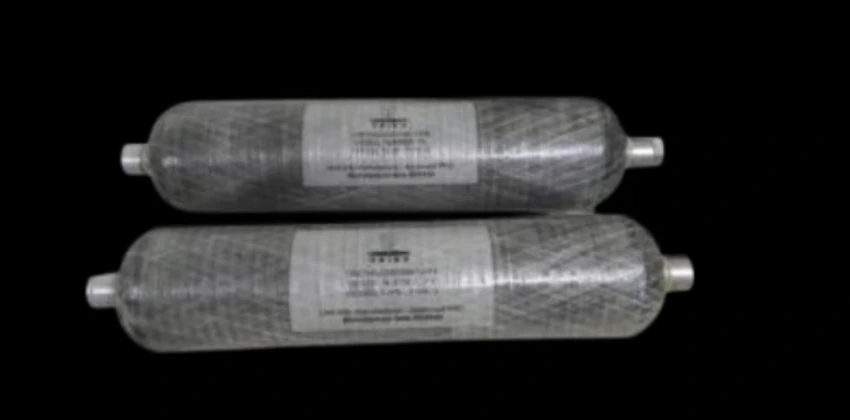
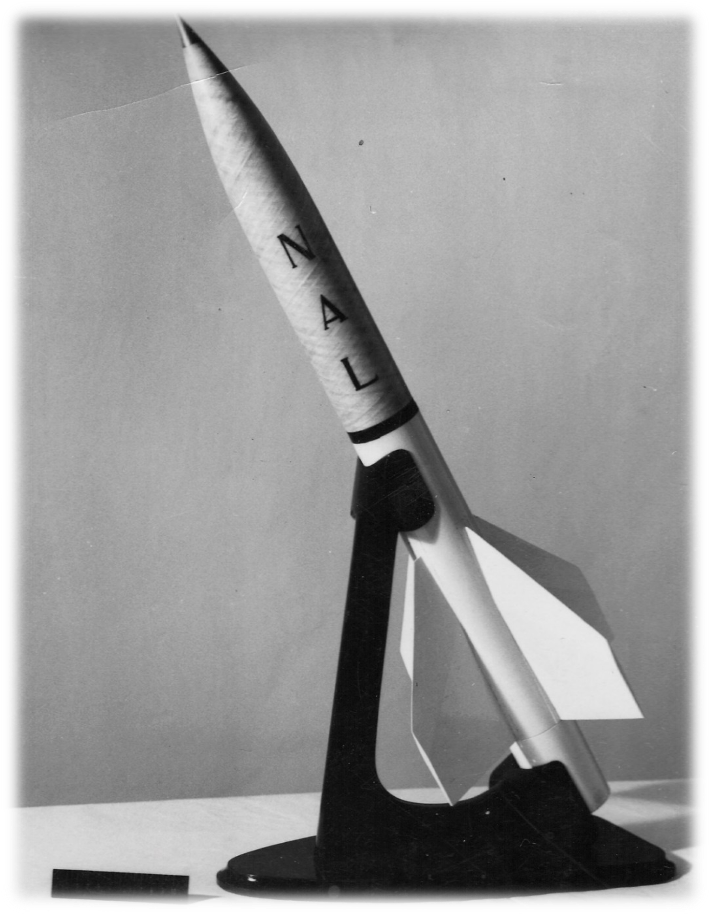
During his work at National Aeronautical Laboratories (NAL), Mr. Gopala Krishna Vinjamuri applied filament-winding technology to a rocket dome during 1964–1968, in collaboration with Dr. A. P. J. Abdul Kalam. The archival image reflects this earlier aerospace application of composite manufacturing techniques and the engineering experience behind VNZT's present-day research.
Filament winding enables controlled fiber placement on complex curved structures, from aerospace components to composite pressure vessels. This historical work is distinct from VNZT's current development-stage gas-storage products.
Investigating the role of composite storage vessels in future alternative-fuel and energy systems, subject to engineering and regulatory requirements.
Opportunities in mobile gas storage, distribution, handling, and transportation logistics across industrial and energy markets.
Advancing patented pressure-vessel concepts, end-cap architecture, and boil-off gas solutions through research, prototyping, and collaboration.